
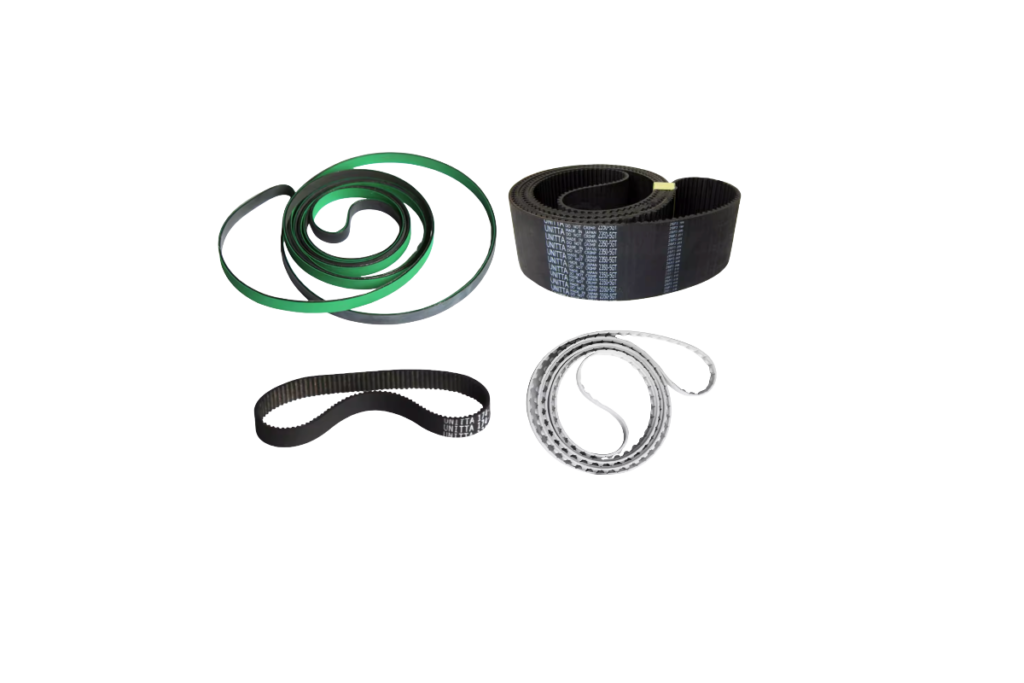
In the fast-paced world of SMT (Surface Mount Technology) manufacturing, the reliability of pick-and-place machines directly determines production efficiency and product yield. JUKI, a leader in SMT equipment, has built a reputation for precision and durability, but even the most advanced machines rely on high-quality belts to maintain peak performance. As critical components for motion transmission and PCB conveyance, JUKI pick and place machine belts vary by material, specification, and application scenario. This guide breaks down the core belt materials, model-specific configurations, and selection tips to help SMT manufacturers minimize downtime, reduce maintenance costs, and optimize production lines—while ensuring full compatibility with JUKI’s flagship pick-and-place models.
Core Belt Materials for JUKI Pick and Place Machines: Performance & Application Scenarios
The performance of JUKI machine belts is fundamentally determined by their material, with each type engineered to meet specific motion and load requirements. Choosing the right material avoids premature wear, slippage, or breakage, which are leading causes of unplanned production halts.
- Rubber-Based Belts (NBR & EPDM)
Nitrile Butadiene Rubber (NBR) and Ethylene Propylene Diene Monomer (EPDM) are the most common materials for JUKI conveyor belts. NBR belts excel in oil resistance and abrasion resistance, making them ideal for PCB infeed/outfeed and mid-section conveyance in JUKI machines—they maintain stable friction to prevent PCB offset during high-speed transfer. EPDM belts, by contrast, offer superior heat and aging resistance, suitable for long-term continuous operation in high-temperature production environments, commonly used in JUKI’s high-speed models like FX-1R and FX-3.
- Polyurethane (PU) Timing Belts
PU is the gold standard for JUKI’s axis timing belts (X, Y, Z, T axes), thanks to its high tensile strength, low elongation, and precise tooth engagement. Reinforced with fiberglass cores, PU timing belts eliminate slippage, ensuring the JUKI machine’s placement head moves with micron-level accuracy—critical for placing tiny components (01005 chips, micro-LEDs). These belts also feature excellent chemical resistance, unaffected by cleaning agents used in SMT line maintenance, extending service life by 30% compared to standard materials.
- Fabric-Reinforced Flat Belts
Fabric-reinforced flat belts combine a rubber base with a nylon or polyester fabric cover, balancing flexibility and load-bearing capacity. They are used in JUKI’s auxiliary motion mechanisms (e.g., feeder drive systems), providing quiet operation and stable power transmission without damaging delicate feeder components. Their wear-resistant surface reduces replacement frequency, cutting long-term maintenance costs for manufacturers.
Model-Specific Belt Configurations for JUKI Pick and Place Machines
JUKI’s diverse pick-and-place lineup (KE series, FX series) requires customized belt solutions to match each model’s speed, placement accuracy, and structural design. Below is the core belt matching guide for JUKI’s most widely used models, with part numbers for direct reference to streamline procurement.
- JUKI KE 750/760 Series: Cost-Effective Mass Production Workhorses
The KE 750/760 is a staple for mid-to-high volume SMT production, with belts focused on durability and stable conveyance. Key belts include:
- Timing Belts (Axis Drive): E2308725000 (YB timing belt, Y-axis drive), E2432725000 (XB timing belt, X-axis drive), E3023725000 (Theta timing belt, T-axis rotation). These PU fiberglass-core belts ensure ±0.05mm placement accuracy, supporting most consumer electronics component placement.
- Conveyor Belts: E2017725000 (infeed/outfeed conveyor belt S), E2016725000 (mid-section conveyor belt C). Made of NBR rubber, they handle PCB widths from 50mm to 330mm, with anti-slip texture to prevent board jams during high-speed transfer.
- JUKI KE 2010/2020/2030 Series: Precision-Focused Mid-Speed Models
Designed for medium-volume, high-precision production (automotive electronics, medical devices), the KE 2010/2020/2030 relies on high-precision timing belts and multi-spec conveyor belts:
- Timing Belts: E3014729000 (Theta timing belt, T-axis), E3021729000 (Z-axis timing belt), 40000688 (XB timing belt, X-axis). These belts enable ±0.03mm placement accuracy, ideal for fine-pitch QFP and BGA components.
- Conveyor Belts: 40019528 (conveyor belt S-L), 40019541 (conveyor belt C-L). Available in multiple lengths (M/L/E) to adapt to different PCB sizes, with EPDM material for high-temperature resistance in automotive PCB production lines.
- JUKI KE 2050/2060/2070/2080 Series: High-Speed Flagship Production Models
The KE 2050-2080 series delivers high-speed placement (up to 36,000 CPH) for high-volume consumer electronics production, requiring belts that balance speed and precision:
- Timing Belts: 40000732 (YB timing belt, Y-axis), 40000688 (XB timing belt, X-axis), 40001116 (T-axis timing belt, 189-1.5GT). PU material with enhanced fiberglass cores withstands high-frequency motion, reducing elongation to less than 0.1% after 10,000 hours of operation.
- Conveyor Belts: 40000863 (conveyor belt S-M), 40001070 (conveyor belt C-L). NBR rubber with fabric reinforcement, supporting 400mm/s PCB transfer speed without deformation, critical for meeting mass production cycle requirements.
- JUKI FX-1/FX-1R/FX-3 Series: Ultra-High-Speed Smart Production Leaders
FX series machines are JUKI’s top-tier models for ultra-high-speed SMT lines (50,000+ CPH), with belts optimized for extreme speed and stability:
- Timing Belts: L150E821000 (T-axis timing belt, FX-1/FX-1R), 40000732 (YB timing belt, universal for FX series Y-axis). These high-strength PU belts reduce vibration during high-speed movement, ensuring placement accuracy even at maximum speed.
- Conveyor Belts: L171E121000 (infeed/outfeed conveyor belt S1, FX-1R), L167E521000 (mid-section conveyor belt C1). EPDM material with heat-resistant coating, suitable for continuous 24/7 operation, extending service life to 15,000 hours.
Critical Tips for JUKI Belt Selection & Maintenance to Maximize SMT Line Efficiency
Choosing the right belt is only half the battle—proper maintenance and selection strategies directly impact production uptime and belt service life. For SMT manufacturers, these best practices are non-negotiable:
- Prioritize Compatibility Over Cost: Use JUKI-matched belts (with official part numbers) instead of generic alternatives. Generic belts often have poor tooth alignment, causing axis offset and component placement errors that lead to costly rework.
- Regular Inspection & Tension Adjustment: Check belt tension monthly—loose belts cause slippage and accuracy loss; over-tightened belts damage bearings. Replace belts immediately if cracks, tooth wear, or elongation exceed 0.5%.
- Environment Control: Keep SMT lines clean and dry—dust accumulation accelerates belt wear, while humidity causes rubber aging. Use filtered compressed air to clean belts during maintenance, avoiding harsh chemical cleaners that degrade PU materials.
Conclusion
JUKI pick and place machine belts are the unsung heroes of SMT production, with material and model matching directly determining line efficiency and product quality. By understanding the performance characteristics of rubber, PU, and fabric-reinforced belts, and matching them to your JUKI model (KE 750/2050/FX-3), you can minimize unplanned downtime, reduce maintenance costs, and boost production yield.
Whether you need to replace worn belts, upgrade for higher speed, or optimize component placement accuracy, choosing the right JUKI-specific belts is the first step to SMT line success. Our team provides full-line JUKI belt solutions with official part number matching and fast delivery—contact us today to tailor a belt procurement and maintenance plan for your production line.