
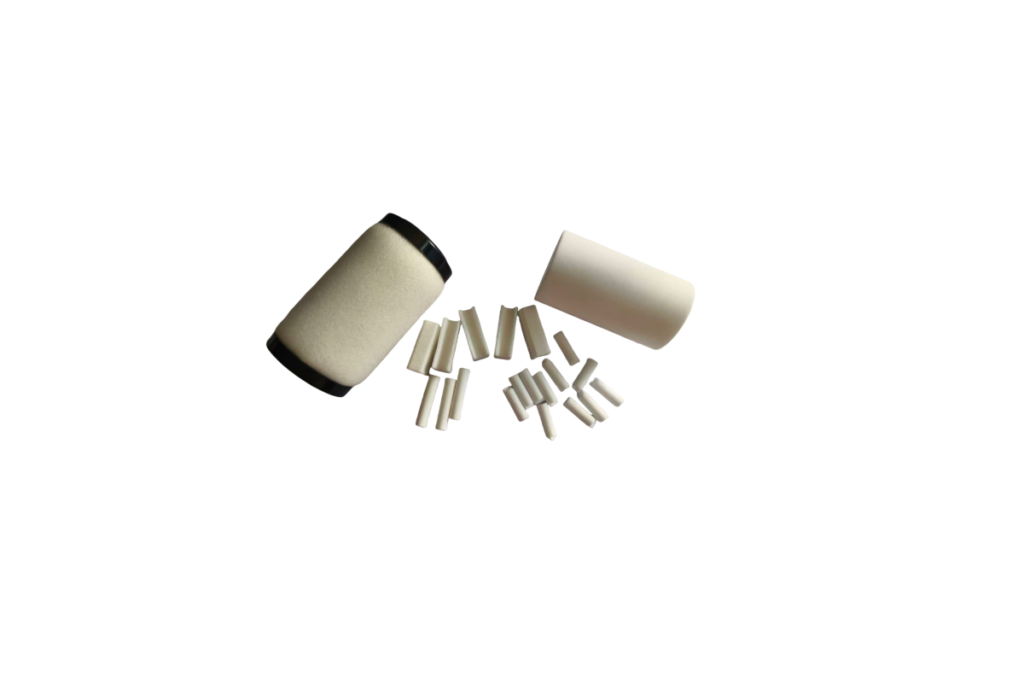
For SMT manufacturers relying on JUKI pick-and-place machines, high-quality filter cotton is a core component to maintain equipment precision, extend service life and ensure stable production. Dirty or mismatched filters can cause vacuum failure, nozzle clogging and even PCB assembly defects, directly affecting production efficiency and product yield. This guide systematically sorts out the matching filter cotton models for mainstream JUKI pick-and-place machine series, and shares professional selection and maintenance suggestions, helping you optimize SMT production line management.
Core Functions of JUKI Pick-and-Place Machine Filter Cotton
JUKI pick-and-place machine filter cotton mainly undertakes three key roles in SMT production. First, it filters dust, solder paste residues and tiny particle impurities in the air path, preventing them from entering the vacuum system and nozzle to avoid suction failure. Second, it isolates oil and water vapor in the compressed air, protecting the internal precision components of the machine from corrosion. Third, it maintains stable air pressure in the equipment, ensuring the nozzle can accurately pick and place components.
There are two main types of filter cotton for JUKI machines: standard dust filter cotton for basic impurity filtration and HEPA filter cotton for high-precision production scenarios. HEPA filters can remove 99.97% of particles with a size of 0.3 microns, which is suitable for fine component assembly such as 01005 chips and BGA components. Choosing the right filter cotton model according to the machine type is the premise of ensuring filtration efficiency.
JUKI Pick-and-Place Machine Filter Cotton Classification by Series & Models
- JUKI KE Series Filter Cotton (Classic High-Efficiency Production Line)
The KE series is the most widely used classic model in JUKI equipment, suitable for medium and large-scale SMT production. Its matching filter cotton models are highly standardized, and the replacement frequency is relatively stable.
- KE-2010/2020: Solenoid Valve Filter(dual-hole) 40011159, and Solenoid Valve Single-Hole Filter 40011159
- KE-2050/2060: Core filter cotton models include PF901002000, PF901010000 (head oil-water separation filter), 40011160 (solenoid valve flat head filter) and Small Round plate 40011159. The PF901002000 is the main head vacuum filter, which needs to be replaced every 800-1000 working hours.
- KE-2070/2080: Equipped with high-performance filter cotton 40046646, E3052729000 and PF901007000 Filter, which have stronger oil-water separation capacity. It is suitable for high-speed production lines, and the replacement cycle is shortened to 600-800 working hours under high-dust working environments.
- KE-3010/3020: Matching filter cotton E3052729000, consistent with KE-2070/2080, which is convenient for enterprises with mixed models to unify spare parts inventory.
- KE-750: Special filter cotton VFL-44, small in size and easy to replace, suitable for the compact head structure of this model, and needs to be checked every 500 working hours. and Solenoid Valve Filter(Round plate+ Round disk) VGED-G SEE0 and Filter element E7917725000
- JUKI FX Series Filter Cotton (High-Speed Precision Production)
The FX series focuses on high-speed and high-precision SMT assembly, and its filter cotton is designed to adapt to high-frequency operation, with higher filtration precision and durability.
- FX-1/FX-1R: Exclusive head oil-water filter cotton E3052729000, optimized for the high-speed vacuum system of this model, which can effectively reduce nozzle blockage during high-frequency component placement. JUKI FX-1/FX-1R Metal Filter L155E421000.
- FX-2/FX-3: Using the same E3052729000 filter cotton as FX-1R, and adding an auxiliary dust filter at the air inlet. It is recommended to replace the main filter every 700 working hours and the auxiliary filter every 1500 working hours.
- JUKI JX Series Filter Cotton (Cost-Effective Medium-Speed Production)
The JX series is a cost-effective model for small and medium-sized enterprises, with simple structure and low maintenance cost of filter cotton.
- JX-100: Matching vacuum filter cotton (soft cotton type), no fixed exclusive model number, which can be used with universal JX series special soft filter cotton, and the replacement cycle is 1000-1200 working hours.
- JX-300/JX-350: Using the same filter cotton as JX-100, and can be compatible with 40046646 in emergency, which is convenient for emergency replacement of spare parts.
- JUKI RS/RX Series Filter Cotton (New Generation Intelligent Production), RS-1/RS-1R model including 00101002/ 4493166 filter; RX-7 16Head 40163249 Filter; FX-7 8Head 40163249 Filter
The RS/RX series is JUKI’s new generation of intelligent pick-and-place machines, with integrated filter design, and the filter cotton has better sealing performance.
- RS-1/RS-1R: Special integrated filter cotton, no separate model number, matched with the original machine’s vacuum module, needs to be replaced as a whole every 1000 working hours, and cannot be replaced with ordinary filter cotton to avoid air leakage.
- RX-7/RX-8: Exclusive nozzle vacuum filter core, small in size and high in filtration precision, suitable for the ultra-high precision placement of this model, and needs to be replaced every 600 working hours to ensure the placement accuracy of fine components. RX-7 RX-8 Head filter: 40163249 RX7 P16 filter 3.8×5.8×1.0, 40163249 RX7 P8 15×0.2mm and RX-8 Filter 40244490
Key Tips for Filter Cotton Selection & Replacement (Improve Equipment Efficiency)
- Selection Principles (Avoid Mismatch Risks)
- Prioritize original or original-standard filter cotton: Non-standard filter cotton has poor sealing and low filtration efficiency, which may cause vacuum system damage in 3-6 months.
- Match according to production scenario: Choose HEPA filter cotton for fine component assembly (01005, BGA), and standard dust filter cotton for ordinary component production to save costs.
- Unify spare parts models: For enterprises with multiple JUKI models, prioritize models with universal filter cotton (such as E3052729000) to reduce inventory pressure.
- Scientific Replacement Cycle (Extend Equipment Life)
- Standard working environment (low dust, stable temperature and humidity): Replace core filter cotton every 800-1000 working hours, and auxiliary filter every 1500-2000 working hours.
- Harsh environment (high dust, high humidity): Shorten the replacement cycle by 30%, and clean the filter cotton surface with dry air every 200 working hours to extend temporary service life.
- Mandatory replacement after failure: If the machine appears nozzle suction weakness, component missing placement or vacuum alarm, replace the filter cotton first, which can solve 80% of similar faults.
- Replacement Operation Points (Ensure Filtration Effect)
- Cut off the power supply and air source before replacement to avoid safety accidents.
- Check the filter seat for dust and oil accumulation, and clean it with alcohol cotton to ensure tight fit between the new filter and the seat.
- After replacement, test the vacuum pressure of the machine. The standard vacuum value of JUKI machines should be above -90KPa, otherwise it is necessary to check whether the filter is installed in place.
Conclusion
Choosing the right filter cotton and replacing it regularly is the key to ensuring the stable operation of JUKI pick-and-place machines and reducing maintenance costs. This guide covers the matching filter cotton models of mainstream JUKI series, from classic KE series to intelligent RS/RX series, which can help you quickly find the corresponding products.
For SMT manufacturers, rational management of filter cotton inventory and strict implementation of replacement standards can not only reduce equipment downtime, but also improve the qualification rate of PCB products. If you need to confirm the filter cotton model of special JUKI models or customize high-efficiency filter solutions, you can contact our professional team at any time to get one-stop support.